
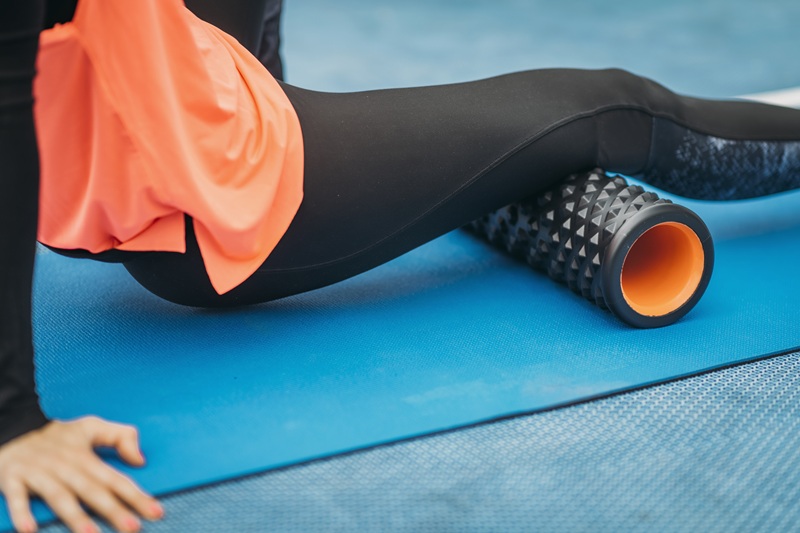
During pregnancy, the abdominal wall stretches to make room for a growing baby. The connective tissue between the abdominal muscles also stretches, allowing the muscles to move farther apart. After delivery, that separation often decreases as the body recovers. For some women, a noticeable gap, bulging, or feeling of core weakness remains.
This is known as diastasis recti. It is common during and after pregnancy, and the size of the gap does not tell the whole story. How well your abdominal muscles manage pressure and support everyday movement matters too. Physical therapy can help address these functional concerns and guide a gradual return to exercise and daily activities.
What Diastasis Recti Means for Your Core
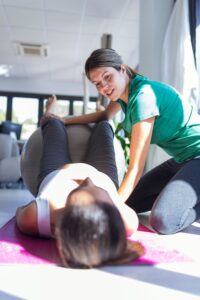
Your rectus abdominis muscles run vertically along the front of your abdomen. Between them is a band of connective tissue called the linea alba. During pregnancy, the linea alba stretches as the abdominal wall adapts to the growing uterus.
Diastasis recti occurs when the distance between the two sides of the rectus abdominis remains widened. The separation can appear above, at, or below the belly button. Clinicians may consider the width and depth of the separation, along with how the abdominal wall responds during movement.
Diastasis Recti Beyond Pregnancy
Although diastasis recti is strongly associated with pregnancy, it is not limited to postpartum women. Men and people who have never been pregnant can also develop abdominal separation. Factors that repeatedly increase pressure within the abdomen may contribute in some cases.
Diastasis recti can also occur in infants. This typically improves as the abdominal muscles develop and strengthen.
Signs of Postpartum Diastasis Recti
Postpartum diastasis recti does not always cause noticeable symptoms. Some women first notice changes during movements that engage the abdominal muscles.
Possible signs include:
- A ridge or bulge along the middle of the abdomen during certain movements
- A visible gap or softness around the belly button
- Doming or coning when sitting up, lifting, or exercising
- Difficulty engaging the core during everyday activities
- A feeling of reduced abdominal strength or support
These signs do not necessarily mean something is wrong or that you need treatment. An evaluation can look at how your abdominal wall functions during the activities that matter to you.
A Simple Diastasis Recti Self-Check

You can do a basic check at home, although it cannot diagnose diastasis recti or show how well your core functions. Lie on your back with your knees bent and feet flat. Place your fingertips across your abdomen near your belly button. Gently lift your head and shoulders, then feel the space between the abdominal muscles. You can repeat the check above and below your belly button.
Notice more than the width of the gap. You can also observe whether the midline feels firm or soft and whether your abdomen domes during the movement. A physical therapist can perform a more complete assessment and evaluate how your core responds during breathing, lifting, exercise, and other activities.
How Common Is Diastasis Recti After Birth?
Diastasis recti is common during pregnancy and can remain after delivery. One study of first-time mothers found that all participants had some abdominal separation by 35 weeks of pregnancy. Another study found that 60% of women had diastasis recti at six weeks postpartum, while about one-third still had it at 12 months.
The separation can change considerably during postpartum recovery. Some women see improvement without treatment, while others continue to notice a gap, doming, weakness, or difficulty with certain activities. How your abdominal wall functions can be more useful than judging recovery by the gap alone.
Do You Need to Avoid Crunches With Diastasis Recti?

Crunches are often included on lists of exercises to avoid with diastasis recti, but they are not automatically harmful. What matters is how your abdominal wall responds to the exercise and whether you can manage the load comfortably.
You may notice a ridge or cone along the middle of your abdomen during a crunch, sit-up, or other movement. This is commonly called doming or coning. It can be a useful sign that the exercise needs to be adjusted, especially if you cannot maintain comfortable control.
That does not mean crunches have to remain off-limits. Women’s health physical therapy can help you build abdominal strength progressively and determine when more demanding exercises are appropriate.
Physical Therapy for Diastasis Recti: What Helps
Physical therapy for diastasis recti looks at more than the abdominal muscles alone. The diaphragm, abdominal wall, pelvic floor, hips, and back all contribute to core function. Treatment focuses on improving strength and coordination for everyday movement, exercise, and the activities you want to return to.
Why Gap Size Is Only Part of the Story
Closing the gap completely is not always the goal of diastasis recti rehabilitation. Physical therapists also consider how the tissue along the midline responds when you breathe, move, and use your abdominal muscles.
A wider gap does not necessarily mean your core cannot function well. Likewise, a smaller gap does not automatically mean strength and coordination have fully returned. Your symptoms and how your abdominal wall performs under increasing demands provide additional information.
Core Coordination and Breathing
Breathing affects how pressure moves through your abdomen. Your diaphragm, abdominal muscles, and pelvic floor work together as you breathe, lift, exercise, and move throughout the day.
Physical therapy may use breathing and core exercises to improve this coordination. Rather than teaching one breathing pattern for every activity, your therapist can help you use your core effectively during the movements that are challenging for you.
Progressive Core Strengthening
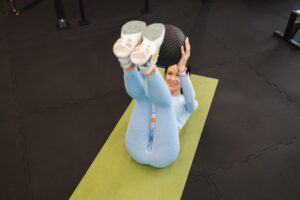
Diastasis recti exercises can become more challenging as your strength and control improve. Depending on your starting point and goals, rehabilitation may progress through:
- Gentle abdominal activation and breathing exercises
- Core control while sitting, standing, and moving your arms or legs
- Strengthening for lifting, carrying, bending, and other daily activities
- More demanding exercises such as planks and loaded carries
- Running, jumping, lifting, or other activities you want to return to
There is no single progression that every woman needs to follow. Pelvic floor physical therapy can help determine which exercises are appropriate and when to increase the challenge.
Using Your Core During Everyday Activities
Diastasis recti rehabilitation should carry over into everyday life. Lifting a baby, carrying a car seat, getting out of bed, and returning to workouts all place different demands on the abdominal wall.
A physical therapist can help you find comfortable strategies for these movements while gradually increasing what your core can handle. The goal is not to avoid normal activities. It is to build the strength and coordination needed to perform them confidently.
Diastasis Recti and Pelvic Floor Physical Therapy
The abdominal wall and pelvic floor both help manage pressure during movement, exercise, and everyday activities. Some women with diastasis recti also experience bladder leaks, pelvic pressure, or other pelvic floor symptoms.
When these concerns occur together, women’s health physical therapy can evaluate both areas. Treatment can then address abdominal strength and coordination alongside any pelvic floor concerns that may be affecting function.
Can Physical Therapy Help Diastasis Recti Years Later?
Diastasis recti is not limited to the first few months after childbirth. Women can seek physical therapy months or years later if they experience core weakness, doming, or difficulty with certain activities.
Treatment focuses on your current strength, symptoms, and goals rather than how long it has been since pregnancy. If you have a hernia, significant pain, or other concerns that may require medical evaluation, your physical therapist can also recommend appropriate follow-up.
Building a Plan for Diastasis Recti Recovery
There is no single exercise or diastasis recti treatment that works for everyone. Two women with a similar separation may have different symptoms and goals. One may want to lift her child comfortably, while another wants to return to running or strength training.
Recovery also does not need to follow a “bounce back” timeline. Physical therapy focuses on building strength and improving how your core functions during the activities that matter to you.
At Apogee Therapy Center, women’s health physical therapy can assess your abdominal wall, core function, and related pelvic floor concerns. Schedule an evaluation to better understand what your core needs and build a plan around your goals.