

Neurological conditions and injuries can change how your body moves, responds, and performs everyday activities. Walking, maintaining balance, reaching for objects, or getting out of a chair may become more difficult.
Neuromuscular rehabilitation helps patients address movement limitations associated with conditions affecting the nervous system. Physical therapy focuses on improving strength, coordination, mobility, and functional independence based on each patient’s abilities and goals.
At Apogee Therapy Center, our physical therapists develop individualized rehabilitation plans that consider your condition, current limitations, and daily activities. Whether you’re recovering from a neurological injury or managing a long-term condition, treatment focuses on helping you make the most of your physical abilities.
Who Can Benefit From Neuromuscular Rehabilitation?
Neuromuscular rehabilitation may help people experiencing changes in movement, strength, or coordination due to neurological conditions or injuries.
Apogee Therapy Center identifies the following conditions among its rehabilitation services:
- Multiple sclerosis (MS): Addressing muscle weakness, fatigue-related movement limitations, balance difficulties, and changes in mobility.
- Stroke: Supporting recovery of movement, coordination, walking ability, and everyday physical function.
- Traumatic brain injury (TBI): Addressing movement, balance, coordination, and mobility limitations following a brain injury.
- Guillain-Barré syndrome: Helping patients rebuild strength, endurance, and functional mobility during recovery.
- Spinal cord injuries: Supporting mobility, strengthening, movement training, and functional independence according to the level of injury.
- Amputee rehabilitation: Helping patients improve strength, balance, mobility, and functional movement following limb loss.
Rehabilitation needs vary considerably, even among patients with the same diagnosis. Your physical therapist considers your medical history, current abilities, and individual goals when recommending treatment.
Signs You May Benefit From Neuromuscular Physical Therapy
Changes in nervous system function can affect movement in different ways. Some patients experience sudden limitations following an injury or illness. Others notice gradual changes associated with a chronic neurological condition.
Physical therapy may be appropriate if you experience:
- Muscle weakness that affects daily activities
- Difficulty walking or maintaining a steady gait
- Reduced balance or coordination
- Trouble standing up, transferring, or changing positions
- Changes in movement control
- Reduced endurance during everyday tasks
- Difficulty navigating stairs or uneven surfaces
- Limited mobility following a neurological injury or illness
- Increased dependence on assistance for physical activities
These symptoms can have several causes. New or suddenly worsening neurological symptoms require prompt medical evaluation rather than routine physical therapy scheduling.
How Neuromuscular Rehabilitation Helps
Neuromuscular physical therapy focuses on improving movement and helping patients perform daily activities as safely and independently as possible.
Depending on your needs, rehabilitation may include:
- Strength training: Exercises that address weakness and support functional movement.
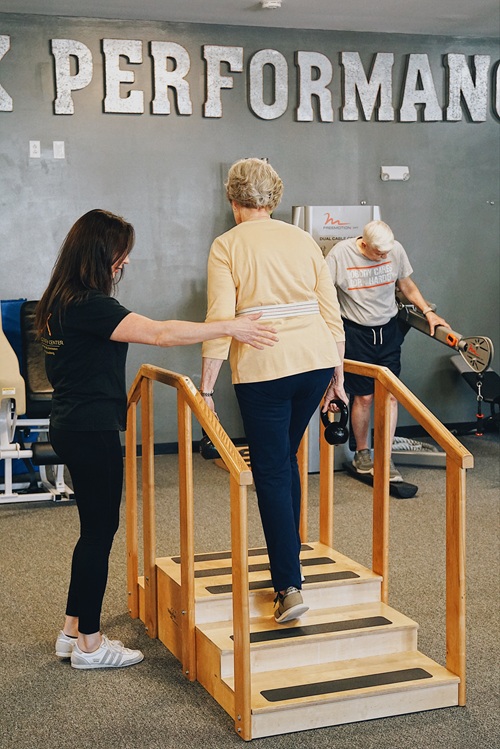
- Gait training: Practicing walking patterns, mobility techniques, and appropriate assistive device use.
- Balance and coordination exercises: Activities that improve stability and movement control.
- Neuromuscular re-education: Exercises that help patients practice coordinated, controlled movement.
- Functional mobility training: Practicing transfers, standing, reaching, and other everyday movements.
- Endurance training: Gradually increasing tolerance for physical activity.
- Flexibility and mobility exercises: Addressing stiffness and restrictions that interfere with movement.
Your treatment plan depends on your condition and functional abilities. Some patients work toward regaining lost skills, while others focus on maintaining mobility, adapting to physical changes, or improving daily independence.
What to Expect From Neuromuscular Rehabilitation
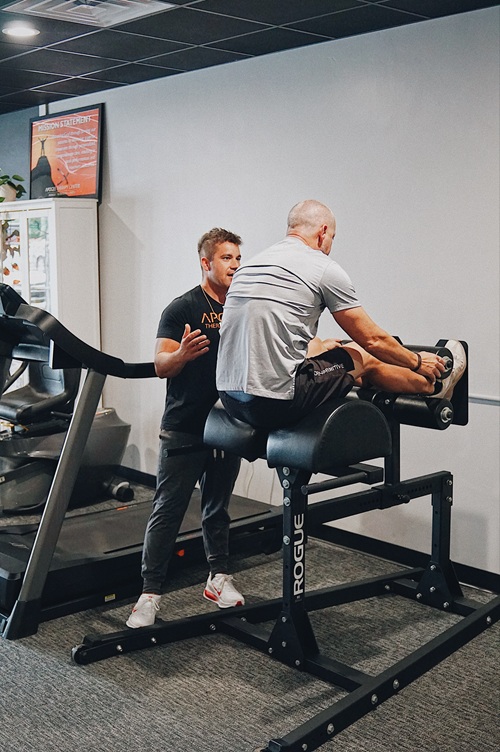
Your first appointment begins with a review of your medical history, current symptoms, and functional goals. Your physical therapist may assess strength, joint mobility, balance, coordination, walking ability, and other movements relevant to your condition.
The evaluation also considers how your limitations affect daily life. For example, you may want to walk more comfortably through your home, improve your ability to climb stairs, or complete transfers with less assistance.
Your therapist uses these findings to develop a rehabilitation plan appropriate for your needs.
Treatment may involve repeated movement practice, strengthening exercises, gait training, and functional activities. Your therapist monitors your response and adjusts the program as your abilities, symptoms, and goals change.
Rehabilitation That Supports Everyday Independence
Neurological rehabilitation isn’t only about improving individual muscle movements. It also considers how those movements affect your ability to participate in everyday life.
For one patient, progress may mean walking a longer distance with an assistive device. For another, it may involve standing more steadily, getting out of a chair, or improving coordination during household activities.
Some neurological conditions involve fluctuating symptoms or progressive changes. In those situations, physical therapy may focus on maintaining function, adapting activities, and supporting safe movement rather than restoring previous abilities.

The nervous system can adapt through practice and experience. This ability, called neuroplasticity, plays an important role in some forms of neurological rehabilitation. Repeated, task-specific movement practice can support motor learning and functional improvement, although results depend on the condition and individual circumstances.
Find Neuromuscular Rehabilitation at Apogee Therapy Center
Apogee Therapy Center has locations in Michigan and South Carolina. Contact your preferred clinic to confirm availability of neuromuscular rehabilitation for your specific condition.
Individualized Rehabilitation at Apogee Therapy Center
At Apogee Therapy Center, we understand that neurological conditions affect patients differently. Two people with the same diagnosis may have different abilities, limitations, and rehabilitation goals.
Our physical therapists consider these differences when developing treatment plans. We focus on practical activities that support mobility, physical function, and participation in daily life.
We also recognize that rehabilitation progress isn’t always linear. Changes in health, fatigue, and physical abilities can influence how patients respond to treatment. Your therapist adjusts recommendations based on your needs and response to care.
Take the Next Step Toward Better Mobility
Living with a neurological condition or recovering from a neurological injury can bring significant physical challenges. Physical therapy may help you improve movement, maintain functional abilities, and work toward greater independence.
At Apogee Therapy Center, rehabilitation begins with understanding your condition, your current abilities, and the activities that matter most to you.
Move Better. Feel Stronger. Live At Your Peak
It is our aim to provide personal, compassionate care delivered by highly trained and experienced therapists.
Book An Appointment