

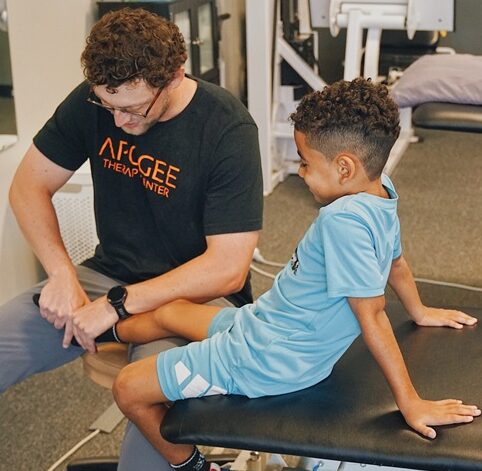
Pain going away does not always mean an athlete is ready to compete again. Strength, control, and confidence may take longer to return. That gap can matter when an athlete goes from everyday movement back to the speed and intensity of sports.
Walking, climbing stairs, or jogging without pain are encouraging signs of recovery. However, they do not show how a knee, ankle, or other injured area will respond to sprinting, cutting, jumping, and landing. A safe return to sports after an injury requires gradually preparing for those demands.
Why Feeling Fine Is Not Enough to Return to Play
Everyday activities place different demands on the body than sports. Walking is generally slower and more predictable. During practices and games, athletes accelerate, stop, change direction, jump, and react to other players.
That is why sports physical therapy looks beyond whether an athlete can move without pain. Rehabilitation can progressively introduce the speed, force, and movements required by the athlete’s sport before returning to unrestricted play.
Building Load Tolerance for Sports
Load tolerance refers to how well the body handles increasing amounts of force, movement, and repetition. During sports injury rehabilitation, these demands can be increased gradually as strength, mobility, and movement control improve.
Fatigue also matters. An athlete may move differently near the end of a demanding practice than at the beginning. Return-to-sport testing can include movements performed under increasing intensity or fatigue to see how well the athlete maintains control.
Return-to-Sport Criteria Physical Therapists Use
Return-to-sport physical therapy uses objective measures alongside an athlete’s symptoms and recovery timeline. The specific criteria depend on the injury, sport, and demands of the athlete’s position. Several areas are commonly evaluated before returning to unrestricted play.
Range of Motion
An injured joint should have enough mobility to perform the movements the sport requires. For example, limited knee extension can affect running and landing mechanics. Physical therapists assess range of motion throughout rehabilitation and compare sides when appropriate.
Strength and Side-to-Side Differences
Strength testing helps show whether the injured area can handle increasing demands. For some lower-extremity injuries, therapists may use a limb symmetry index to compare the injured and uninjured sides.
A 90% symmetry threshold is commonly used in some return-to-sport testing, particularly after ACL reconstruction. However, the percentage does not tell the whole story. The uninjured side can also lose strength during months of reduced training. Therapists may consider both side-to-side differences and overall strength when evaluating progress.
Functional and Sport-Specific Testing
Strength alone does not show how an athlete will perform during faster, more complex movements. Functional testing can evaluate how well the athlete produces and absorbs force during movements similar to those required in sports.
Depending on the injury and activity, return-to-sport physical therapy may include:
- Single-leg hop testing
- Repeated or triple-hop testing
- Crossover hop testing
- Timed hop testing
- Cutting and change-of-direction drills
- Running, jumping, throwing, or other sport-specific movements
Physical therapists consider more than distance or speed. They also evaluate movement quality, including balance, landing control, and how the athlete responds as the difficulty increases.
Confidence and Mental Readiness

Physical recovery is only part of returning to sports. Fear of reinjury can affect confidence and how an athlete approaches certain movements.
Therapists may use questionnaires, conversations, and progressively challenging drills to assess readiness. Gradually practicing the movements an athlete is concerned about can also help rebuild confidence before returning to unrestricted competition.
Return-to-Play Testing vs. Waiting It Out
Time matters after a sports injury because healing cannot be rushed. However, reaching a certain number of weeks or months does not necessarily mean an athlete is ready for competition. Return-to-play testing adds information about strength, movement, and function to the recovery timeline.
ACL research provides a useful example. In the Delaware-Oslo ACL cohort study, athletes who passed return-to-sport criteria had a 5.6% knee reinjury rate, compared with 38.2% among those who did not pass. The study also found a lower reinjury rate for each month return was delayed, up to nine months after surgery.
Recovery timelines vary widely by injury and athlete. Instead of relying on a general timeline, sports injury rehabilitation can combine appropriate healing time with strength, movement, and sport-specific testing.
Sports Injury Rehabilitation for Young Athletes
Young athletes can face a significant risk of another injury when returning to high-demand sports. A review of athletes under age 20 found that about one in five sustained another ACL injury after ACL reconstruction and returning to sport.

Young athletes may also feel pressure to return for the next game, tournament, season, or college showcase. A structured recovery plan gives athletes, parents, and coaches clearer measures of progress than the calendar alone.
After an athlete returns to practice or competition, signs that deserve attention include:
- Limping or favoring one side
- Swelling after practices or games
- Avoiding movements such as cutting or jumping
- A joint that feels unstable or gives way
- Pain that returns as activity increases
These symptoms do not automatically mean another injury has occurred. They are reasons to stop and reassess how the athlete is responding to the increased demands.
How to Safely Return to Sports After an Injury
Returning to sports is usually a progression rather than a single clearance point. The stages vary by injury and sport, but sports injury physical therapy may progress through steps such as:
- Managing swelling and restoring comfortable range of motion
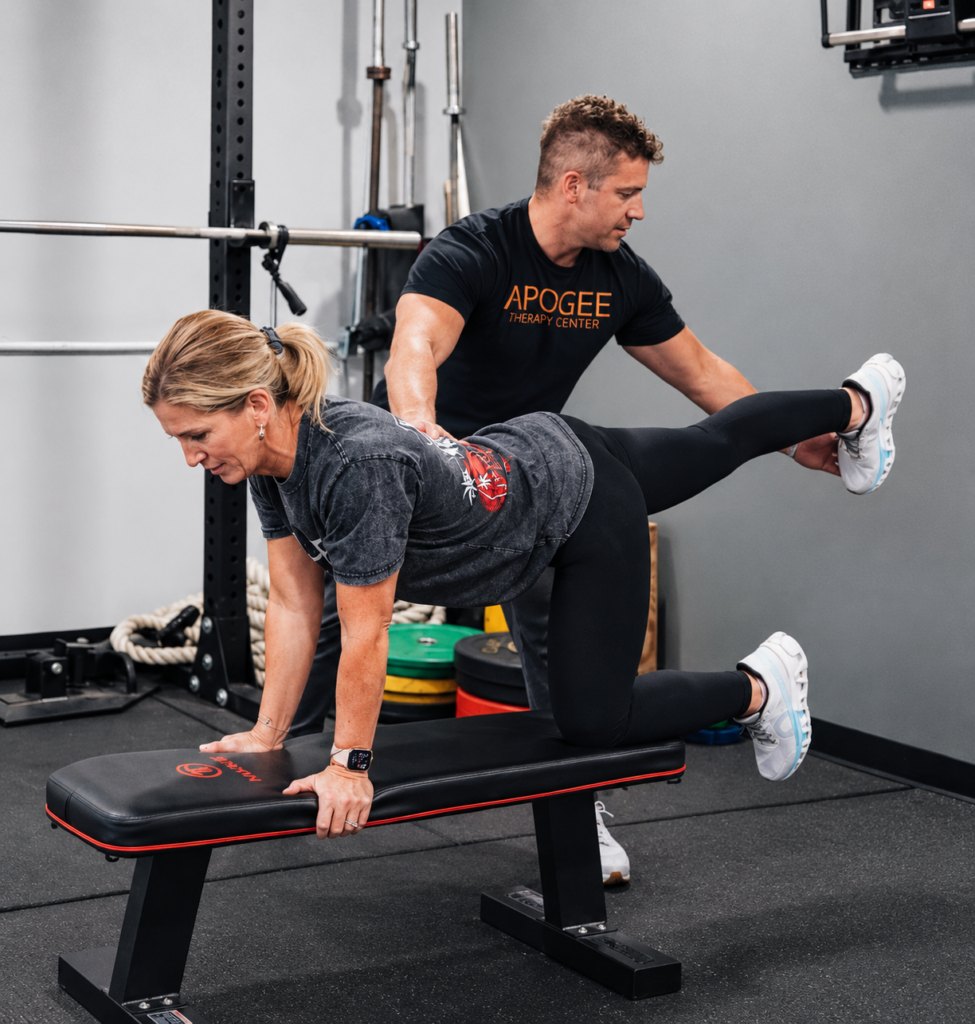
- Rebuilding strength in the injured area and surrounding muscles
- Introducing running, jumping, landing, or other higher-demand movements
- Practicing sport-specific skills at increasing intensity
- Returning to practice and progressively increasing participation
- Returning to unrestricted competition when appropriate
Moving through these stages gives athletes opportunities to see how the injured area responds as demands increase. Practice can also help rebuild confidence before returning to competition.
Continuing Strength and Conditioning After Physical Therapy
Returning to competition does not necessarily mean the work completed during rehabilitation should stop. Strength, mobility, and movement exercises may continue as part of regular training.
A physical therapist can recommend which exercises are worth maintaining based on the injury, sport, and remaining areas of weakness. This gives athletes a more individualized plan than following a fixed weekly routine after therapy ends.
Planning Your Return to Sports After Injury

A return to sports after an injury should consider more than a date on the calendar. Range of motion, strength, movement quality, sport-specific demands, and confidence can all help determine whether an athlete is ready to progress.
Every injury and athlete is different. A high school point guard and a weekend soccer player may have the same diagnosis but need different rehabilitation plans. Position, training demands, competition schedule, and current movement all affect what returning to sport looks like.
At Apogee Therapy Center, return-to-sport rehabilitation is built around the athlete, the injury, and the demands of the activity. If you are working toward a return to practice or competition, a return-to-sport evaluation can identify areas that may need more work before you play again.
Move Better. Feel Stronger. Live At Your Peak
It is our aim to provide personal, compassionate care delivered by highly trained and experienced therapists.
Book An Appointment